TL:DR
You can’t improve what you’re not measuring. Tracking AI visibility properly means running a structured set of real customer questions across multiple AI platforms, repeatedly, and comparing yourself against named competitors, not typing one question into ChatGPT and calling it research.
If you’ve ever tried checking your own AI visibility by asking ChatGPT a question or two yourself, this article explains why that tells you far less than it feels like it does, and what actually works instead. If you’re still getting your head around what AI visibility even means, start here.
Why one question in one chat window doesn’t tell you much
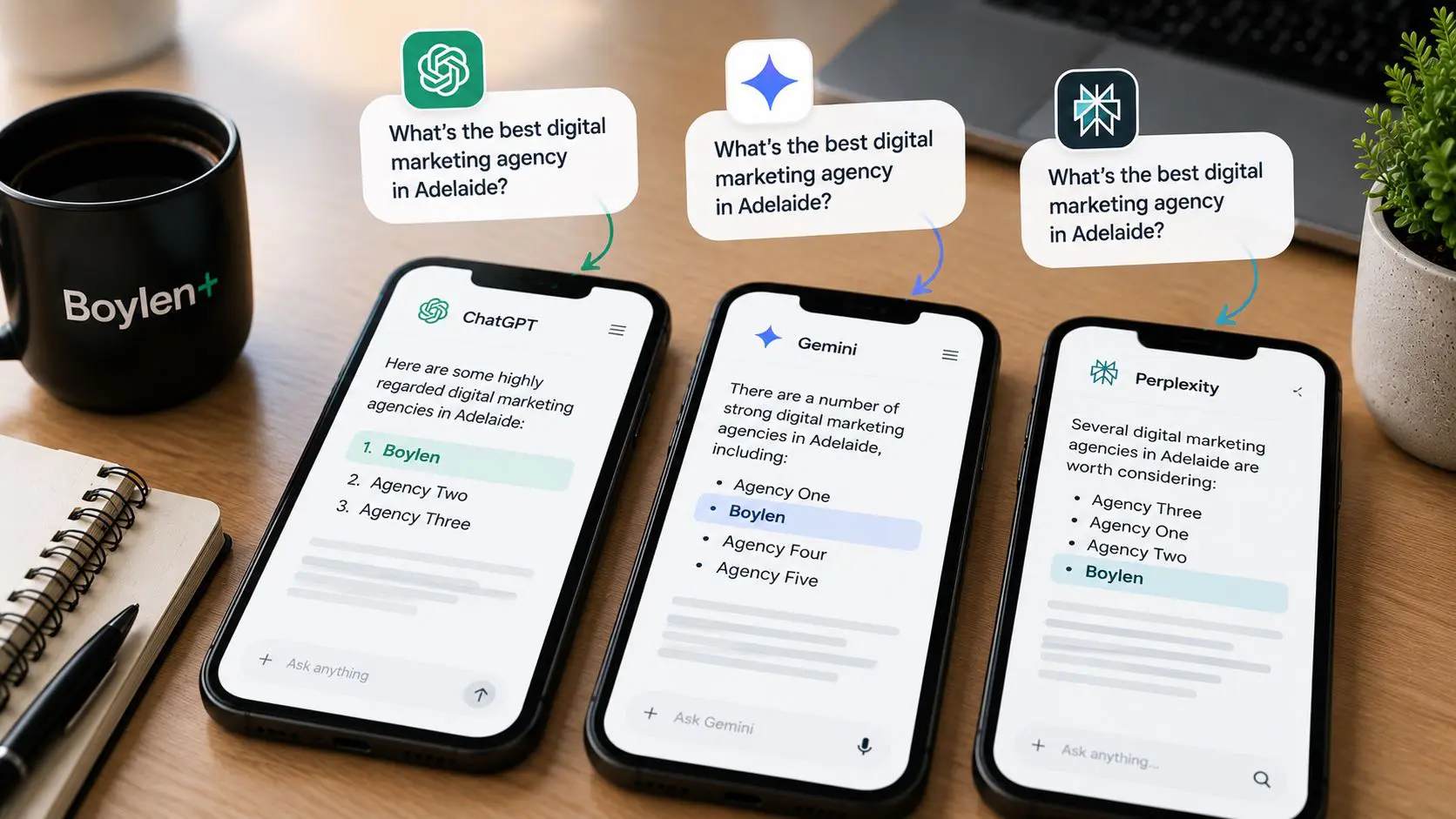
Ask ChatGPT about your industry today, and ask again tomorrow, and you can get two different answers. AI platforms are shaped by the exact wording of the question, by updates to the underlying model, and in some cases by your own account history and personalisation. A single question is a snapshot of one moment, not a measurement.
That’s before you even get to the bigger problem: Your customers aren’t asking one question. They’re asking dozens of different versions of it, across several different platforms, in their own words. If you’re only checking the phrasing that comes naturally to you, you’re seeing a tiny, unrepresentative slice of what’s actually happening.
What proper tracking actually looks like
Build a real prompt set, not a guess
Start with the actual questions your customers ask, not the keywords you’d normally target for SEO. These are often more conversational and specific. “Best evaporative cooler for an Adelaide summer” behaves differently to an AI platform than “evaporative cooling Adelaide” does to Google. A proper audit builds a large set of these, often into the hundreds once you account for every product, service, and topic that matters to the business, not a handful picked by hand.
Run it across platforms, not just one
ChatGPT, Gemini, Perplexity, Claude, Google AI, Grok, and DeepSeek each behave differently. Some lean heavily on Reddit and forum content. Others pull more from a brand’s own website. A brand can be strong on one platform and completely invisible on another, and you’d never know it from checking just one.
Track named competitors, not just yourself
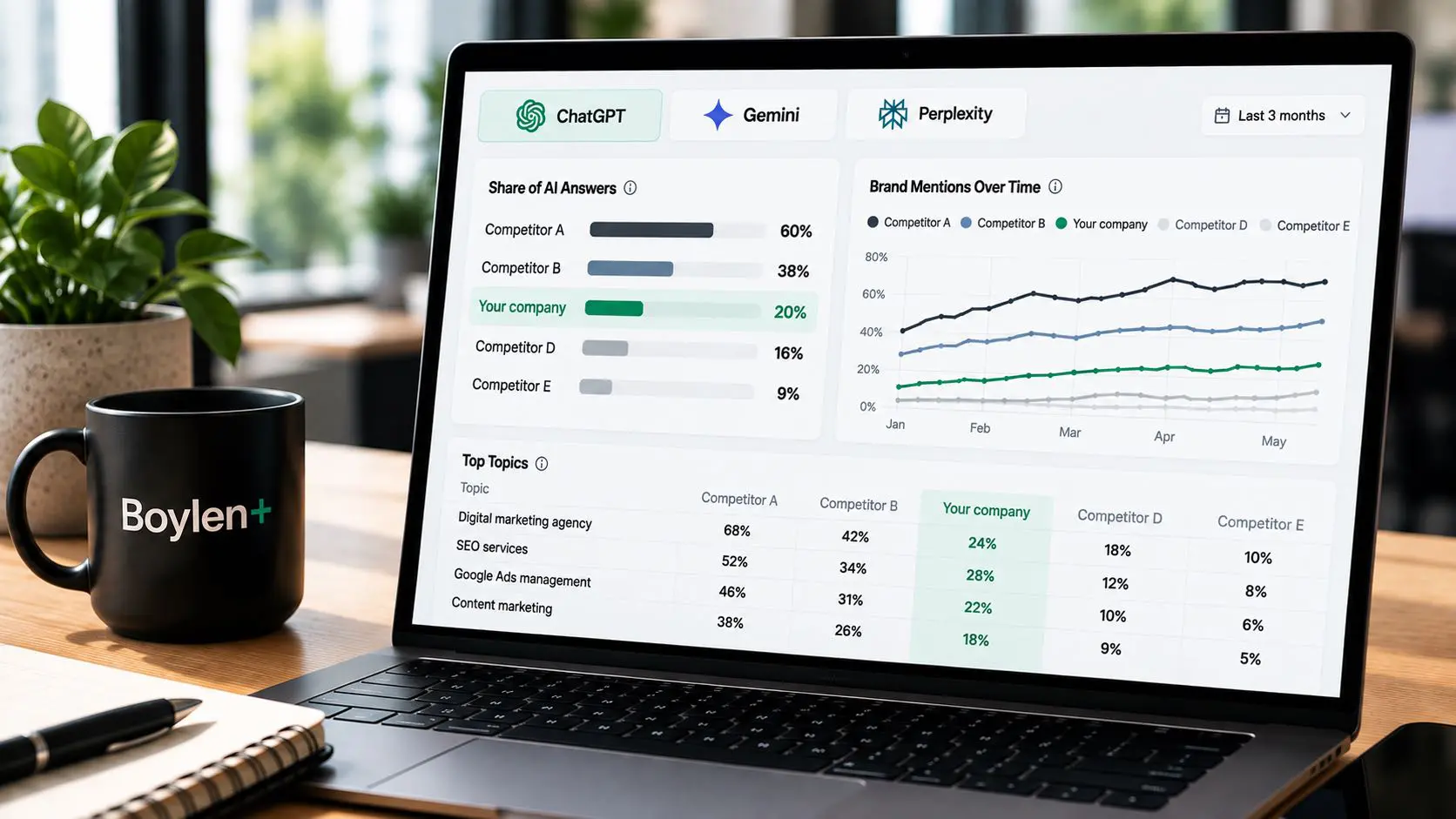
Visibility only means something in context. Being mentioned in 20% of relevant answers sounds fine until you learn a competitor is showing up in 60% of the same set. Real tracking places your numbers next to the brands actually competing for the same attention.
Repeat it on a schedule
AI platforms update their sources and models regularly, and answers shift accordingly. A single audit is a baseline. Ongoing tracking is what actually shows whether you’re gaining ground or losing it.
What good tracking measures, once it’s running
A proper setup gives you more than a single visibility percentage:
- Share of voice: Your visibility relative to every competitor being tracked, not in isolation
- Average position: Whether you’re the brand named first, or an afterthought further down the answer
- Citation and source analysis: Exactly which websites the AI platform pulled from to build its answer, including whether that’s your own site, a competitor’s, or a third party
- Platform-by-platform breakdown: Where you’re strong, where you’re invisible, and why that might be
Doing this properly takes real infrastructure
This isn’t something a spreadsheet and a bit of patience can replicate well. Search Engine Land’s guide to measuring brand visibility in AI search recommends testing a defined set of priority queries across multiple platforms on a repeat schedule, not a one-off check.
Querying multiple AI platforms directly, without the personalisation layer that shapes a normal chat conversation, at the scale needed for a statistically meaningful picture, takes purpose-built tooling. That’s exactly what our AI visibility audits are built for.
If you want to see where your brand actually stands, not guess based on one chat window, that’s the starting point.